
Bitcoin Surges Toward $70,000: Why Crypto Is Rising and What Investors Should Watch
2026-08-20
Bitcoin Surges Towards $70,000 as Liquidity Boost and Short Squeeze Lift Crypto
Lower Treasury yields, improved liquidity conditions and a major short squeeze have pushed Bitcoin back toward the $70,000 level. But after a difficult six months and a sharp decline from its 2025 record high, investors are asking a bigger question: is this the beginning of a new crypto rally, or simply another relief bounce?
Bitcoin has staged a sharp recovery, briefly moving above $69,000 and approaching the psychologically important $70,000 level. The move came as falling Treasury yields improved appetite for risk assets, while a rapid liquidation of bearish positions added forced buying pressure to the market. Reports indicated that more than $1 billion in crypto short positions were liquidated during the rally.
The immediate catalyst was broader financial-market liquidity. The U.S. Treasury announced plans to increase buyback operations for longer-dated government debt, contributing to a decline in long-term yields and a weaker U.S. dollar. Stocks, gold and Bitcoin all responded positively.
But the current move needs to be viewed in context. Bitcoin is recovering from a major correction and remains far below its previous record high.
Why Is Bitcoin Rising Towards $70,000?
Several forces appear to be working together.
1. Lower Treasury Yields Are Improving Risk Appetite
Bitcoin has increasingly behaved like a high-beta global risk asset.
When Treasury yields rise sharply, investors can earn relatively attractive returns from safer assets such as government bonds. Higher yields also increase borrowing costs and can reduce the amount of capital flowing into speculative investments.

The opposite can happen when yields decline.
The latest rally followed a drop in long-term Treasury yields after the U.S. Treasury announced an expansion of its debt buyback operations. The move helped calm the bond market and weakened the U.S. dollar, creating a more favorable environment for risk assets, including Bitcoin.
This does not mean that Treasury buybacks directly cause Bitcoin to rise. Instead, the market may interpret improving liquidity and lower yields as supportive of assets further out on the risk curve.
2. A Massive Short Squeeze Added Fuel to the Rally
The Bitcoin rally was also amplified by a classic short squeeze.
A short seller profits when an asset declines. However, when Bitcoin begins rising rapidly, traders who have borrowed and sold Bitcoin or used leveraged derivatives can be forced to close their positions.
Closing a short position requires buying back the asset.
That creates a chain reaction:
- Bitcoin starts rising.
- Short sellers begin losing money.
- Exchanges liquidate highly leveraged bearish positions.
- Those positions are closed through buying.
- Additional buying pushes Bitcoin even higher.
- More shorts are liquidated.
During the latest move, reports indicated that more than $1 billion in short positions were liquidated in a very short period, helping accelerate Bitcoin's move above $69,000.
This is important because a short squeeze can create very powerful rallies, but it can also mean that part of the price movement is technical and temporary rather than driven entirely by new long-term demand.
What Has Bitcoin's Trend Been Over the Last Six Months?
The last six months have been significantly different from the bullish environment investors experienced in 2025.
Bitcoin has largely moved through a period of correction, consolidation and recovery attempts.
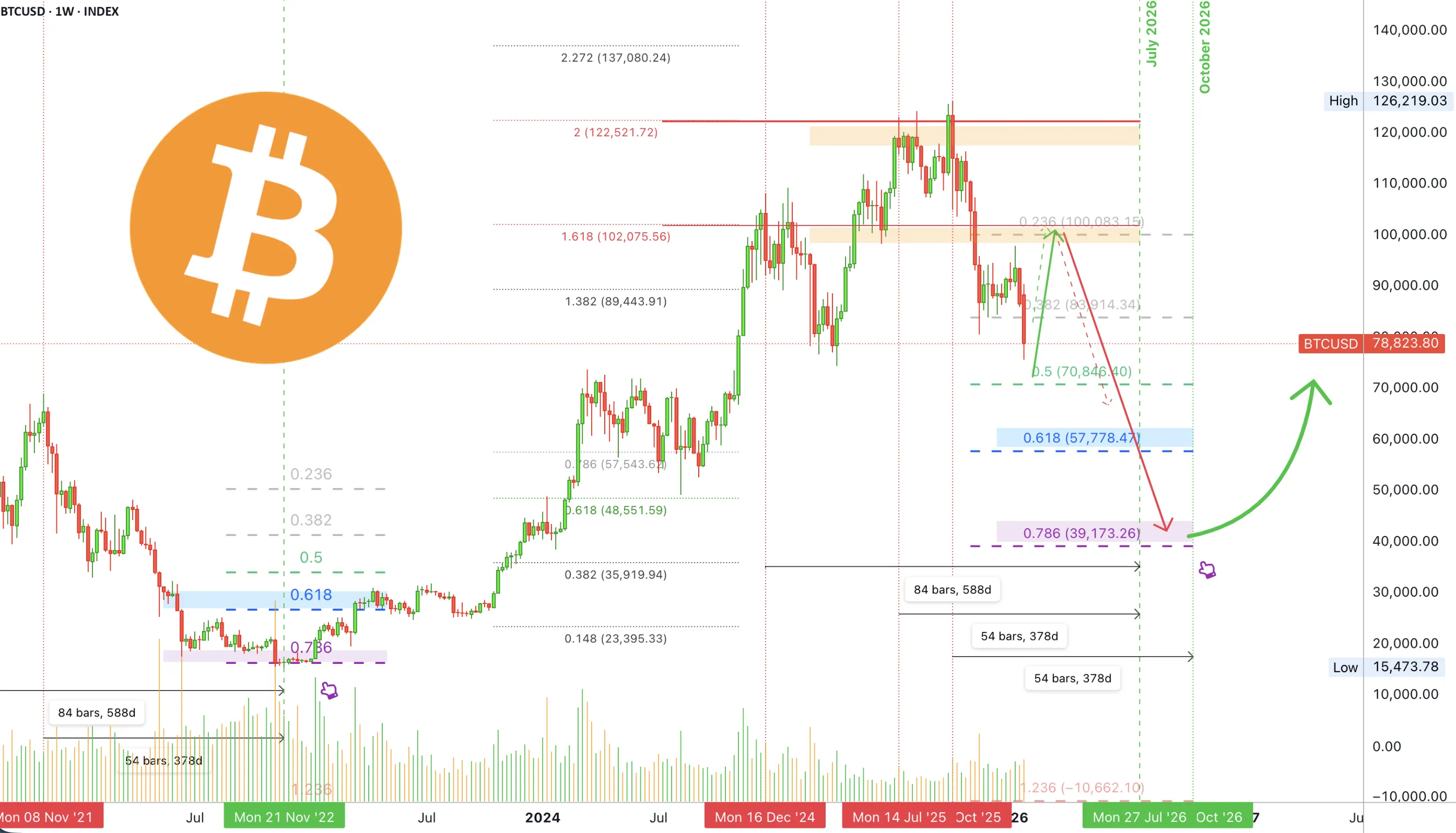
Available six-month price data shows Bitcoin trading around the mid-$60,000 range in August 2026, with the asset down roughly 9% from its level six months earlier, although the exact percentage varies depending on the start and end dates used.
The broader story looks something like this:
Phase 1: Post-Record-High Correction
After reaching a record above $125,000 in late 2025, Bitcoin entered a significant correction.
Profit-taking, changing investor sentiment and competition for capital from other high-growth sectors contributed to a much weaker environment for crypto. By mid-2026, Bitcoin had fallen into the low-$60,000 range.
Phase 2: Extended Consolidation
Rather than immediately recovering, Bitcoin spent much of 2026 trading in a relatively depressed range.
This created a market where:
- Long-term investors were waiting for clearer signals.
- ETF flows became increasingly important.
- Macro events had a larger impact.
- Traders became sensitive to support and resistance levels.
- Leverage built up on both the bullish and bearish sides.
Phase 3: Liquidity-Driven Recovery
The latest move toward $70,000 represents one of the stronger recovery attempts in recent months.
However, investors should distinguish between:
A short-term price spike and a confirmed long-term trend reversal.
Bitcoin will likely need to establish support above important price levels and attract sustained spot and institutional demand before the market can confidently describe this as the beginning of a major new bull run.
When Was Bitcoin's Last All-Time High?
Bitcoin's most recent all-time high occurred in late 2025, when the cryptocurrency traded above $125,000, according to recent market reports.
That puts the current price near $70,000 roughly 40% to 45% below the previous peak, depending on the exact market price used.
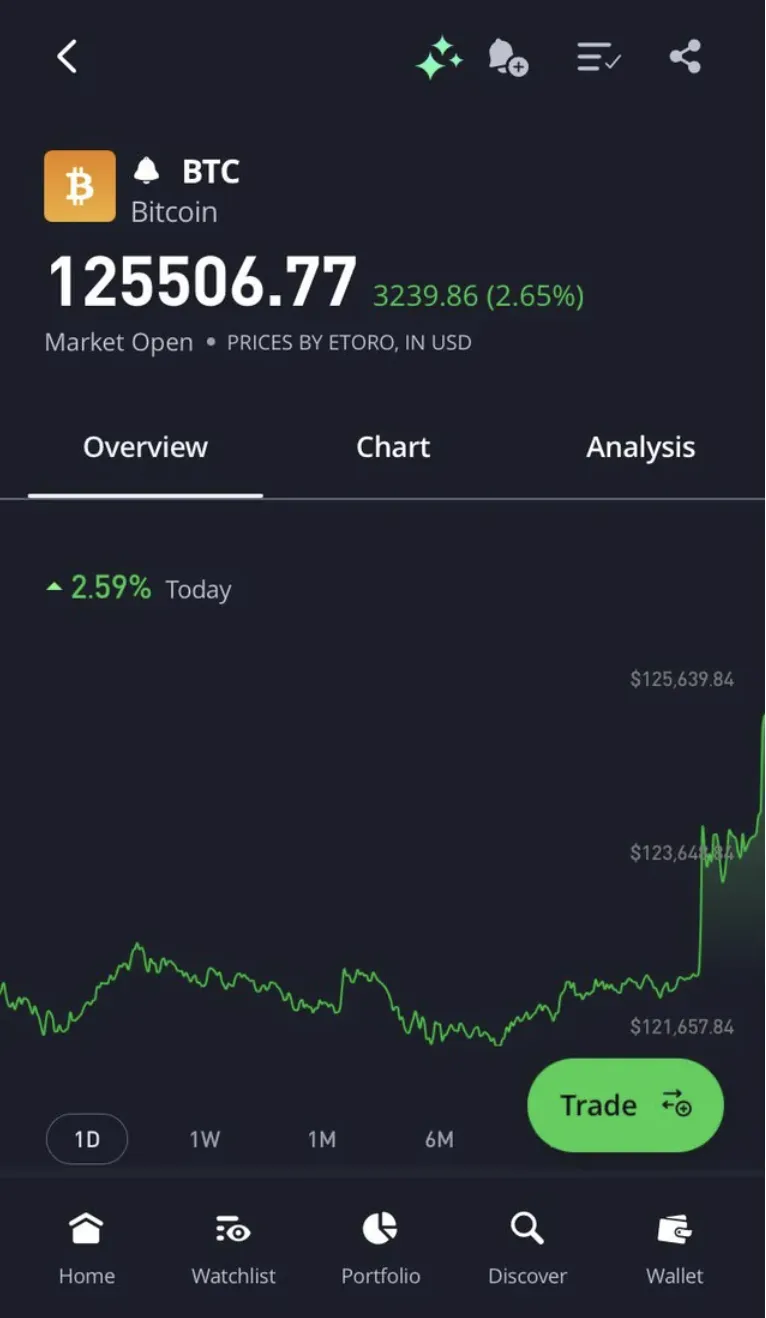
This context is important.
Bitcoin at $70,000 may feel expensive compared with its price during previous bear markets. But compared with a record above $125,000, it represents a significant drawdown.
That does not automatically make Bitcoin "cheap." Assets can always fall further.
But it does mean that investors evaluating Bitcoin today are entering at a substantially different valuation than investors who bought near the late-2025 peak.
What Would Be a Sensible Entry Point for Someone Targeting a 30% Return?
The most important point is this:
There is no entry price that can guarantee a 30% profit.
Crypto is one of the most volatile asset classes in the world, and a 30% target can be reached quickly—or the investment can fall 30% before recovering.
Instead of trying to identify one perfect entry price, a better approach is to define a risk/reward structure.
For example, if Bitcoin trades around $70,000:
| Entry Price | 30% Target |
|---|---|
| $70,000 | $91,000 |
| $65,000 | $84,500 |
| $60,000 | $78,000 |
| $55,000 | $71,500 |
The lower the entry price, the easier it becomes to achieve a 30% gain without requiring Bitcoin to revisit its previous all-time high.
A More Conservative Strategy: Staggered Buying
Instead of investing everything at one price, an investor could divide capital into multiple entries.
For example:
- 25% of capital at the current market level.
- 25% if Bitcoin experiences a meaningful pullback.
- 25% near a major support area.
- 25% reserved for confirmation that a new uptrend is established.
This approach is often called dollar-cost averaging, although a support-based staggered strategy is more selective than investing at fixed intervals.
The advantage is simple: you do not need to perfectly predict the bottom.
The Key Question Is Risk, Not Just the 30% Target
Suppose someone buys Bitcoin at $65,000 with a target of $84,500.
The investor should also ask:
What happens if Bitcoin falls to $55,000 before reaching $84,500?
A good investment strategy defines both:
- Upside target
- Maximum acceptable downside
Chasing a 30% gain without defining the downside can turn a trading plan into simple speculation.
Which Cryptocurrencies Should Investors Watch?
For investors looking beyond Bitcoin, it is generally better to focus first on projects with:
- High liquidity
- Large user or developer ecosystems
- Clear use cases
- Institutional participation
- Strong infrastructure
- Sustainable token economics
Here are several major assets worth watching.
Bitcoin (BTC): The Macro and Institutional Benchmark

Bitcoin remains the most important cryptocurrency to watch.
It is the primary beneficiary of:
- Institutional adoption
- Spot ETF participation
- Monetary liquidity cycles
- Digital gold narratives
- Large-scale risk-on and risk-off flows
If Bitcoin establishes a sustained uptrend, the rest of the crypto market often benefits.
The reverse is also true.
A sharp Bitcoin correction can pull down even fundamentally strong altcoins.
Ethereum (ETH): The Smart Contract and Institutional Infrastructure Play
Ethereum remains one of the most important assets in the crypto ecosystem.

Its importance comes from its role in:
- Decentralized finance
- Stablecoins
- Tokenized assets
- Smart contracts
- Layer-2 ecosystems
- Institutional blockchain development
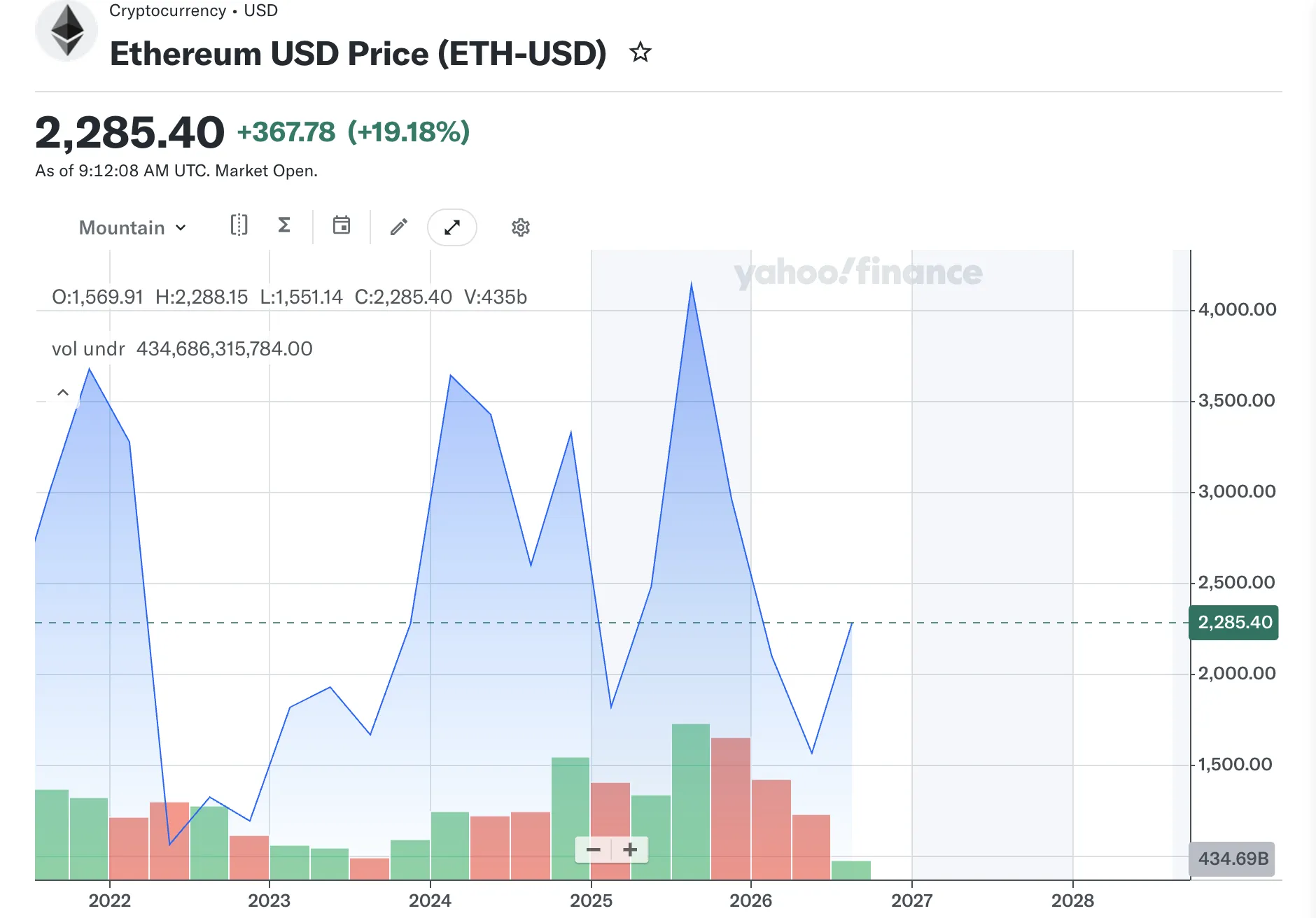
Ethereum also participated strongly in the latest market recovery, rising sharply during the broader liquidity-driven rally.
For investors, ETH is often viewed as a higher-risk, potentially higher-beta alternative to Bitcoin.
Solana (SOL): Watch for Consumer and High-Throughput Growth
Solana remains a major network to watch because of its focus on:
- High transaction throughput
- Consumer applications
- Trading activity
- DeFi
- Stablecoin usage
- Tokenization and application development

However, Solana can also experience significantly greater volatility than Bitcoin.
The potential upside can be larger—but so can the drawdowns.
Chainlink (LINK): Infrastructure and Tokenized Assets
Chainlink is worth monitoring because blockchain adoption increasingly depends on reliable data infrastructure.

Its network connects smart contracts with external information and could benefit from growth in:
- Tokenized real-world assets
- DeFi
- Institutional blockchain infrastructure
- Cross-chain applications
The key question for investors is whether ecosystem growth translates into sustainable demand for the token.
XRP: Regulatory and Cross-Border Payment Narrative
XRP remains one of the most closely watched large-cap cryptocurrencies.
Its appeal is largely connected to:
- Cross-border payments
- Institutional financial infrastructure
- Regulatory developments
- Ripple ecosystem adoption
However, XRP can be heavily influenced by news and sentiment, making risk management particularly important.
Smaller Altcoins: High Risk, High Potential Reward
Smaller cryptocurrencies can potentially generate much larger returns than Bitcoin.
But there is a reason for that.
Many smaller tokens face:
- Low liquidity
- Weak fundamentals
- Large insider allocations
- Token unlock pressure
- Manipulation risk
- Limited real-world adoption
A cryptocurrency being down 90% does not automatically mean it is undervalued.
In crypto, many projects never return to their previous highs.
For this reason, investors should be especially careful with meme coins and low-liquidity tokens.
What Really Causes Cryptocurrency Prices to Rise?
Crypto prices are influenced by a combination of macroeconomic, technical and market-specific factors.
1. Global Liquidity
Liquidity is arguably one of the biggest drivers of crypto prices.
When:
- Interest rates fall
- Central banks become more accommodative
- Financial liquidity increases
- The dollar weakens
- Investors become more comfortable taking risks
capital can move toward assets such as technology stocks, growth investments and cryptocurrencies.
The recent Treasury market developments illustrate how quickly crypto can react when investors believe financial conditions are becoming more supportive.
2. Interest Rates and Bond Yields
Higher yields can make safer assets more attractive.
If investors can receive attractive returns from government bonds, they may be less willing to take extreme risk in crypto.
Lower yields can change that calculation.
That is why Bitcoin traders increasingly watch:
- U.S. 10-year Treasury yields
- Federal Reserve policy
- Inflation data
- Employment reports
- Liquidity indicators
3. ETF Demand
Spot Bitcoin ETFs have changed the structure of the market by providing institutional and traditional investors with an easier route to gain exposure.
Sustained ETF inflows can create genuine spot demand.
Conversely, ETF outflows can place pressure on sentiment and prices.
Recent reporting has specifically highlighted ETF demand and flows as an important factor in Bitcoin's recovery and broader market participation.
4. Leverage and Liquidations
Crypto markets are heavily influenced by derivatives.
When too many traders become bullish, a sudden decline can trigger long liquidations.
When too many traders become bearish, a rally can trigger short liquidations.
This creates the possibility of extremely fast moves in both directions.
The recent Bitcoin rally is a good example of how a short squeeze can accelerate an already positive market move.
5. Regulation
Government policy can have an enormous impact on crypto.
Positive developments can encourage:
- Institutional adoption
- Banking participation
- ETF products
- Tokenization
- Corporate investment
Negative regulation can create the opposite effect.
Crypto remains particularly sensitive to regulatory developments in the United States because of the country's importance in global capital markets.
6. Adoption and Real-World Utility
Over the long term, a cryptocurrency needs more than social-media hype.
Important indicators include:
- Active users
- Transaction volume
- Developer activity
- Stablecoin growth
- Institutional adoption
- Revenue or fee generation
- Network security
The strongest long-term projects are more likely to survive multiple market cycles.
What Causes Crypto to Fall?
The same forces that create rallies can reverse.
A crypto decline can be triggered by:
Rising Interest Rates
Higher rates reduce the attractiveness of speculative assets.
Stronger U.S. Dollar
A stronger dollar can create tighter global financial conditions.
ETF Outflows
Institutional selling can weaken Bitcoin's spot demand.
Excessive Leverage
When too many traders use leverage, a relatively small price decline can trigger a cascade of liquidations.
Regulatory Crackdowns
Unexpected policy changes can rapidly change market sentiment.
Security Failures
Exchange collapses, hacks and major protocol failures can destroy confidence.
Profit-Taking
After large rallies, early investors often take profits, creating selling pressure.
Geopolitical and Economic Shocks
War, inflation spikes, financial crises and recession fears can cause investors to move away from high-risk assets.
The Biggest Mistake: Trying to Buy the Exact Bottom
Most investors cannot consistently identify the absolute bottom of Bitcoin.

The better question is:
Is the current price attractive relative to my investment horizon, risk tolerance and expected return?
Someone investing for a potential 30% return should consider:
- Their desired entry price.
- Their profit target.
- Their maximum acceptable loss.
- Whether they will buy in stages.
- How much of their portfolio they are willing to allocate to crypto.
- Whether they are investing or actively trading.
A disciplined investor with a defined strategy can often outperform someone who constantly chases the latest rally.
Is Bitcoin's Move Towards $70,000 the Start of a Bigger Rally?
The answer is still uncertain.

The bullish argument is that Bitcoin is benefiting from:
- Lower Treasury yields.
- Improved risk sentiment.
- Potentially more favorable liquidity conditions.
- Renewed institutional and ETF interest.
- A powerful technical short squeeze.
The bearish argument is that Bitcoin remains well below its late-2025 record high, and a short squeeze alone does not guarantee sustained demand. Bitcoin has also spent much of the past six months in a weaker and volatile trading environment.
The next major test will be whether Bitcoin can hold higher levels after the short-covering activity fades.
If buyers continue entering the spot market and institutional demand strengthens, the rally could develop into a more sustained trend.
If liquidity weakens, Treasury yields rise again or ETF flows deteriorate, Bitcoin could easily return to its previous trading range.
Conclusion: Crypto Remains a Liquidity-Driven Market
Bitcoin's surge toward $70,000 demonstrates how quickly cryptocurrency markets can react when macroeconomic conditions, investor positioning and technical factors align.
The latest rally appears to have been driven by a combination of falling Treasury yields, improved liquidity sentiment, renewed crypto demand and a major short squeeze.
However, investors should avoid assuming that every sharp rally marks the beginning of a new bull market.
For someone targeting a 30% return, the most important consideration is not simply finding the "next coin to explode." It is building a strategy around entry price, position size, diversification and downside protection.
Bitcoin and Ethereum remain the primary assets to watch for broad institutional participation, while networks such as Solana and selected infrastructure projects may offer higher upside with correspondingly higher risk.
Ultimately, cryptocurrency prices are shaped by a combination of global liquidity, interest rates, ETF flows, regulation, adoption, leverage and investor psychology.
And in crypto, perhaps more than in almost any other market, one rule remains essential:
Never confuse a strong rally with a guaranteed profit.
By Tommy Thounaojam- Editor MicroMunch
Disclaimer: This article is for informational and educational purposes only. The author is not a licensed financial advisor. This content should not be considered professional financial advice or a guarantee of investment returns. Cryptocurrency investments are highly volatile and can result in substantial losses

Stay updated with our latest news and articles. Join our newsletter!
Trending Now
No trending posts found.