
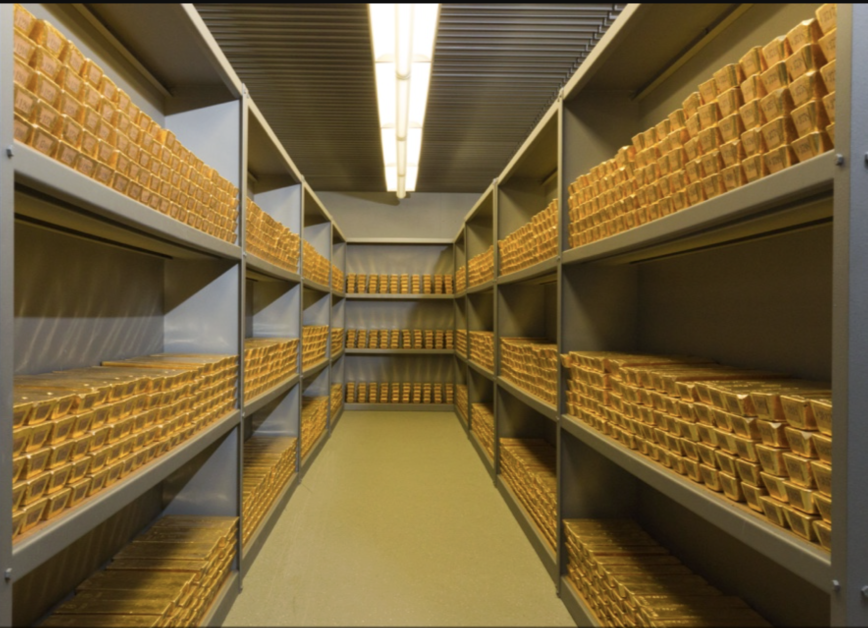
Gold Reserves Explained: Impact on Government, Economy, Currency, Inflation, and Citizens
2025-10-20
What Are Gold Reserves?
Gold reserves are the official holdings of gold maintained by a nation’s central bank or treasury as part of its foreign exchange reserves.
They serve as a store of value, a confidence anchor, and a hedge against financial or geopolitical uncertainty.
Unlike paper currencies or government bonds, gold carries no credit risk and maintains long-term value — which is why it’s often called the “ultimate reserve asset.”
Top 5 Countries With the Highest Gold Reserves (2025)
| Rank | Country | Gold Reserves (Tonnes) | Share of Total Reserves in Gold | Source |
|---|---|---|---|---|
| 1 | United States | 8,133.5 tonnes | ~68% | World Gold Council, 2025 |
| 2 | Germany | 3,352 tonnes | ~67% | WGC, 2025 |
| 3 | Italy | 2,451.8 tonnes | ~65% | WGC, 2025 |
| 4 | France | 2,436.8 tonnes | ~63% | WGC, 2025 |
| 5 | Russia | 2,332.7 tonnes | ~27% | WGC, 2025 |
Emerging economies such as China (2,226 tonnes), India (830 tonnes), and Turkey (795 tonnes) are also rapidly increasing their gold reserves to diversify away from the U.S. dollar.
(Source: World Gold Council, Central Bank Gold Reserves Data 2025)
Why Governments Hold Gold Reserves
Governments hold gold as part of their monetary reserves for five main reasons:
Diversification:
Gold reduces dependency on foreign currencies (especially USD and EUR), lowering exposure to sanctions and FX volatility.Safe-Haven Asset:
In crises — wars, market crashes, or inflation spikes — gold prices typically rise, providing stability to national balance sheets.Revaluation Gains:
When gold prices rise, the value of reserves increases. Some central banks (e.g., RBI, ECB) can use these unrealized gains to strengthen their balance sheets or transfer profits to the government treasury.Confidence in Currency:
High gold reserves signal economic resilience, strengthening investor and public trust in a country’s currency.Crisis Liquidity:
Gold can be swapped or sold internationally in emergencies, providing quick access to foreign exchange liquidity.
Impact of Gold Reserves on the Economy
1. Government Finances
Higher gold reserves improve the sovereign credit profile by boosting total reserves and foreign exchange stability.
They can reduce borrowing costs and support the national currency during global volatility.
2. Central Bank Balance Sheet
Rising gold prices lead to valuation gains, which enhance central bank capital buffers.
Some countries, like India, treat these gains as “contingency reserves” to strengthen financial stability.
3. Investor Confidence
Gold holdings act as a signal of prudence and sound monetary policy — encouraging foreign investment inflows.
How Gold Reserves Affect Currencies
Stronger Currency Support:
Countries with larger reserves are perceived as having more ability to defend their currencies in the forex market.Exchange Rate Stability:
High reserves can reduce speculative attacks, helping maintain exchange rate stability and protect imported goods’ prices.Indirect Dollar Hedge:
By holding gold, central banks reduce overreliance on the U.S. dollar, giving them more policy independence.
However, it’s important to note that gold reserves don’t directly control exchange rates — they act as a psychological and financial stabilizer, not a mechanical one.
Gold, Inflation, and Purchasing Power
1. Inflation Shield
Gold reserves don’t stop inflation directly, but they help control it indirectly by stabilizing foreign exchange rates and maintaining public confidence in the currency.
When a country’s reserves are strong, its currency tends to stay stable — meaning imported inflation (from oil, food, electronics, etc.) remains lower.
2. Purchasing Power
A stable currency maintains citizens’ purchasing power.
Thus, higher gold reserves protect purchasing power indirectly, by preventing rapid currency depreciation during economic shocks.
3. Inflation Hedge for Individuals
Citizens often see gold as a personal hedge against inflation — hence the strong demand for gold jewelry and coins in countries like India, where gold ownership is both cultural and financial.
Effect on GDP and Growth
Gold itself doesn’t produce income or directly raise GDP.
However, indirect effects can occur through:
Fiscal Space:
If gold prices rise significantly, central banks can realize revaluation gains that, if transferred to the government, can fund productive investments.Stability Premium:
Strong reserves reduce crisis probability, encouraging investment and consumption — both of which support GDP growth.Investor Sentiment:
Stable macroeconomic conditions attract foreign investment, boosting medium-term economic growth.
Thus, gold contributes to economic resilience, which supports sustainable GDP growth over time.
Trade-offs and Risks
While gold is a safe-haven asset, over-accumulation comes with opportunity costs:
No Yield:
Gold doesn’t earn interest, unlike bonds or deposits.
Holding too much reduces the overall return on reserves.Storage and Security Costs:
Storing physical gold (in vaults domestically or abroad) requires expensive security and insurance.Liquidity Constraints:
Selling large amounts of gold quickly can impact global prices or attract market scrutiny.Revaluation Volatility:
A fall in global gold prices can reduce the accounting value of reserves, temporarily impacting a central bank’s balance sheet.
What It Means for Citizens
| Aspect | Impact on Citizens |
|---|---|
| Currency Stability | Helps maintain stable import prices and purchasing power. |
| Inflation Control | Indirectly controls imported inflation via FX stability. |
| Economic Confidence | Encourages investment, reduces panic during crises. |
| Fiscal Policy | Government may gain extra fiscal room during gold price booms. |
| Personal Finance | Reinforces cultural trust in gold as a long-term wealth store. |
In short, while citizens don’t feel the gold reserves directly, they benefit through macro stability, lower volatility, and greater policy confidence.
Policy Recommendations for Governments
Diversify Reserves Wisely:
Balance gold with liquid assets like U.S. Treasuries or Eurobonds.Use Revaluation Gains Prudently:
Deploy profits from gold valuation toward debt reduction or infrastructure, not short-term spending.Transparency:
Regularly publish gold reserve data and storage locations — transparency builds trust and investor confidence.Strengthen Domestic Gold Market:
Encourage recycling and domestic refining to reduce import dependence.Leverage Digital Gold & Sovereign Gold Bonds:
Offer citizens safer, interest-bearing gold alternatives that support financial inclusion.
Global Trends in 2025
Central banks are net buyers of gold: Driven by geopolitical uncertainty and dollar diversification.
Emerging markets (India, China, Turkey) are rapidly increasing their gold holdings.
Western economies maintain large, stable reserves built post-WWII for systemic confidence.
The World Gold Council (WGC) reports that central bank purchases in 2024-25 were the highest in over five decades, showing the metal’s enduring relevance in a changing global order.
Conclusion — Gold: The Foundation of Confidence
Gold reserves are more than just shiny bars locked in vaults — they’re a nation’s financial insurance policy.
They symbolize trust, stability, and independence in a volatile global economy.
For citizens, robust gold reserves mean:
A stronger currency,
Lower inflation volatility, and
Greater economic security during crises.
For governments, they mean:
Policy flexibility,
Fiscal safety nets, and
A signal of long-term credibility.
Written by Tommy Thounaojam ( key editor for Micromunch)

Stay updated with our latest news and articles. Join our newsletter!
Trending Now
No trending posts found.
Related Articles
Debug: Tags used: gold reserves, national gold reserves, gold reserves impact economy, how gold reserves affect inflation, gold reserves and currency stability, gold reserves purchasing power