
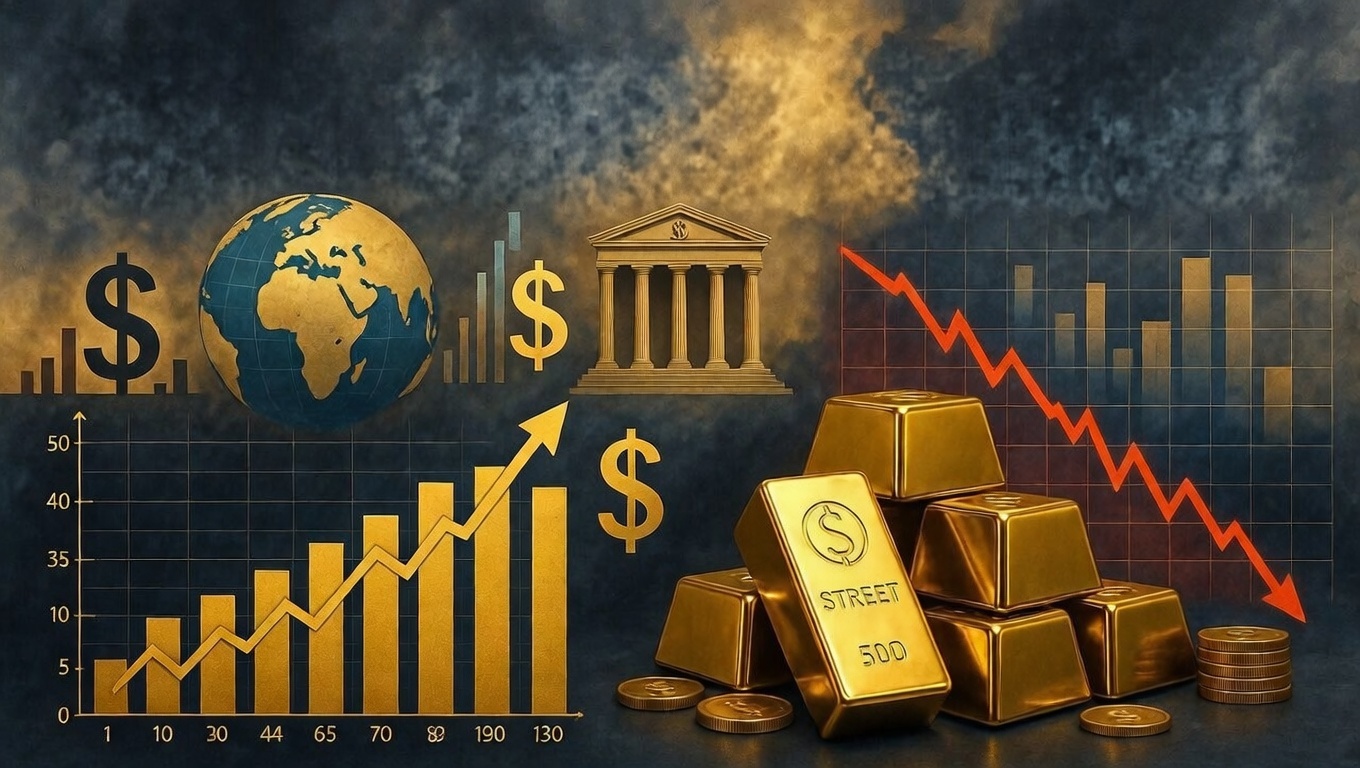
Why Gold Prices Are Skyrocketing in 2026: Should Investors Bet on Stocks or Gold Amid Layoffs and Economic Turmoil?
2026-02-24
In a year marked by persistent economic headwinds, gold has emerged as a beacon for wary investors, shattering records with prices soaring above $5,000 per ounce. This surge, up more than 25% in 2025 alone, reflects a confluence of global uncertainties that are reshaping asset allocations. As corporations slash workforces and tighten belts amid slowing growth, the debate intensifies: Is gold the ultimate hedge, or do stocks offer superior long-term upside?
The Drivers Behind Gold's Meteoric Rise
Gold's ascent is no anomaly but a response to multifaceted pressures. Geopolitical tensions, from the protracted Ukraine conflict to escalating Middle East strife and U.S. frictions with Venezuela and Iran, have amplified demand for safe-haven assets. Investors, spooked by stock market volatility, view gold's low correlation with equities—typically between 0 and 0.2—as a portfolio stabilizer.
Economic instability adds fuel to the fire. Stubborn inflation, ballooning U.S. debt, and doubts over Federal Reserve autonomy have eroded faith in fiat currencies, positioning gold as a bulwark against debasement. January's dismal U.S. jobs report, with fewer-than-expected additions, has stoked bets on rate cuts, reducing the opportunity cost of holding non-yielding gold.
Central banks are pivotal players, stockpiling reserves at unprecedented rates—850 to 1,150 tonnes in 2025 alone—to diversify from the dollar. Nations like China, India, and Poland lead this de-dollarization push, providing a sturdy price floor.
Trade disruptions, including the Supreme Court's recent reversal of Trump-era tariffs, inject further uncertainty, potentially reigniting inflation and bolstering gold's allure. A weakening dollar amid these shifts amplifies gains.
Investor sentiment echoes this: Inflows into gold ETFs and physical bullion have ballooned, particularly in Asia, amid a perceived "structural reset" in global markets. Yet, volatility persists, with February rebounds following profit-driven dips.
Navigating the Hedge: Gold vs. Stocks in a Layoff Era
Corporate cost-cutting and layoffs signal broader malaise, heightening recession fears and making hedging essential. Over the next 1-5 years, gold shines in uncertainty, while stocks promise growth if recovery materializes. Experts advocate diversification, with 5-10% in gold.
| Aspect | Gold | Stocks |
|---|---|---|
| Hedging Effectiveness | Excels against inflation, geopolitics, and downturns with low equity correlation. Thrives in layoff-driven slowdowns. | Volatile; tied to growth but falters in recessions, with potential -38% losses. Cost cuts may lift profits short-term but flag weakness. |
| Projected Returns (2026-2030) | 5-30% in 2026, up to $12,000/oz by 2030; ~8-10% annualized. | S&P 500 to 10,000 by 2029 (~10-15% annualized); historical 9.6% real returns. |
| Risks | Corrections if rates climb (5-20% downside). | Earnings hits from layoffs; crash-prone in downturns. |
| Best For | Uncertainty and recessions; backed by de-dollarization. | Growth recoveries; 20-30% equity allocation advised. |
Amid corporate belt-tightening, gold edges out as the superior short-term hedge, potentially outperforming in stagflation. Stocks, however, may rebound with AI-driven innovation. Investors should blend both, tailoring to risk appetites, and seek professional advice in these unpredictable times.
Final Thoughts: Gold as the Superior Hedge in Uncertain Times
In the face of persistent corporate cost-cutting, widespread layoffs, and lingering economic uncertainty, gold has solidified its position as a formidable safe-haven asset. With prices hovering around $5,150–$5,200 per ounce in late February 2026—having already shattered records amid geopolitical tensions, central bank buying, de-dollarization efforts, and inflation concerns—the yellow metal continues to draw strong structural demand.
Looking ahead to the next 1–5 years (2026–2030), major forecasts point to further upside for gold. Institutions like J.P. Morgan, Goldman Sachs, and others project averages around $5,000–$5,750 by end-2026, with more bullish outlooks eyeing $6,000+ in the near term and peaks potentially reaching $8,000–$13,000 or higher by 2030, driven by ongoing reserve diversification and macro risks. This makes gold a compelling hedge against recessionary pressures, currency debasement, and market volatility—precisely the environment amplified by workforce reductions and slowing growth.
Stocks, by contrast, offer greater long-term growth potential if economic recovery takes hold, fueled by corporate earnings resilience, AI advancements, and potential rate cuts. Historical data shows equities delivering stronger real returns over extended periods (around 9–10% annualized), but they remain vulnerable to downturns, where sharp corrections could erase gains amid the very cost-cutting trends you highlighted.
The verdict for hedging in this climate: Gold stands out as the more reliable protector of capital over the next 1–5 years, especially in scenarios of heightened uncertainty or stagflation. It provides diversification with low correlation to equities and thrives when stocks falter. However, it lacks income generation and can face corrections if risks ease unexpectedly.
The optimal approach isn't an either/or choice. A balanced portfolio—perhaps 5–15% allocated to gold (via physical, ETFs, or miners) alongside equities—offers the best risk-adjusted protection while preserving upside from any rebound. As always in volatile times, tailor allocations to your risk tolerance, time horizon, and goals, and consider consulting a financial advisor for personalized guidance.
In an era where traditional growth engines face headwinds, gold's enduring appeal as insurance against the unknown may prove especially valuable for investors in Mumbai and beyond.

Stay updated with our latest news and articles. Join our newsletter!
Trending Now
No trending posts found.
Related Articles
Debug: Tags used: gold price surge 2026, gold vs stocks investment, economic hedge strategies, inflation and geopolitical risks, corporate layoffs impact, safe-haven assets, central bank gold buying, de-dollarization trends, recession hedging, long-term portfolio diversifi