
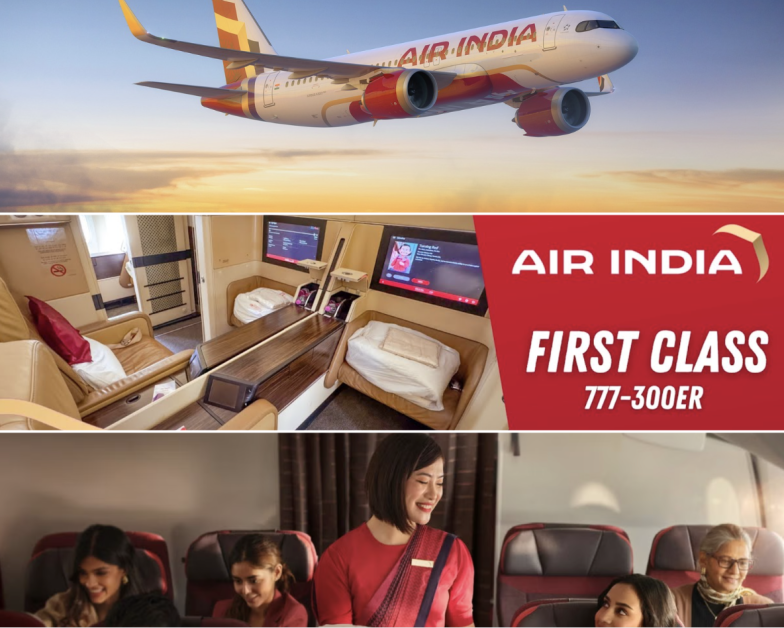
Air India’s Expanding Global Reach: Redefining Luxury & Business Travel Efficiency
2026-03-27
Expanding Global Reach: The Strategic Advantage of Flying with Air India
In the evolving landscape of global aviation, connectivity is no longer just a network metric—it is a core value proposition that defines both traveler experience and airline economics. Air India’s expanding international network is emerging as a strategic differentiator, positioning India not just as a destination, but as a powerful global transit hub linking East and West.
The New Geography of Global Travel
Air India’s network strategy is built around a simple but powerful premise: geography is destiny. Positioned between Europe, North America, Southeast Asia, and Australia, India offers one of the most efficient midpoints for long-haul travel.
By optimizing routes through hubs like Delhi and Mumbai, the airline is enabling faster one-stop connections across continents. For example, connection times between Europe and Southeast Asia or Australia have been reduced to approximately 2.5 hours—placing Air India among the fastest transit options on these corridors.
This is not just operational efficiency—it is a structural shift in how global travel flows.
Business Travel Economics: Time as Currency
For corporate travelers, time is the ultimate currency. Every hour saved in transit directly impacts productivity, deal velocity, and executive well-being.

Air India’s expanding direct routes and optimized schedules translate into:
- Reduced layovers → Less idle time in transit hubs
- Shorter total journey times → Faster turnaround for business trips
- Flexible departure windows → Better alignment with global work schedules
Optimized scheduling on key routes such as Europe–India–Australia now offers both daytime and nighttime departures, giving business travelers greater control over their itineraries.
From a business standpoint, this reduces the “hidden cost of travel”—fatigue, lost hours, and inefficiencies that traditional multi-stop itineraries impose.
Luxury Travel Experience: Seamlessness as a Premium
In luxury travel, the definition of premium has shifted from opulence to effortless continuity.
Air India’s network expansion supports this by:
- Enabling same-terminal transfers at major hubs like Delhi and Mumbai
- Offering integrated lounge access for premium passengers
- Designing schedules that minimize friction between long-haul legs
The result is a journey that feels curated rather than fragmented. Travelers move through a single, cohesive ecosystem instead of navigating multiple disconnected airline experiences.
This is particularly relevant for high-net-worth individuals and luxury travelers who prioritize comfort, predictability, and time optimization over price sensitivity.
Network Effects: The Hidden Power of Partnerships
Beyond its own routes, Air India is aggressively expanding through codeshare and interline partnerships, extending its reach into Europe, Central Asia, and beyond.

These partnerships create a multiplier effect:
- Access to more destinations without operational overhead
- Seamless ticketing across multiple carriers
- Integrated baggage and scheduling systems
For travelers, this means a single booking can unlock a far wider global network—without the complexity traditionally associated with multi-airline journeys.
Hub Strategy: India as the Next Global Transit Gateway
Air India’s long-term vision is not just expansion—it is transformation. The airline is actively positioning India as a global aviation hub, comparable to Dubai, Doha, or Singapore.

Key enablers include:
- Rapid airport infrastructure development
- Increasing fleet modernization with wide-body aircraft
- Strategic alignment with global travel flows
As a result, routes that previously required multiple stops via the Middle East or Europe can now be completed more efficiently via India.
This shift has macroeconomic implications:
- Increased inbound tourism
- Higher transit passenger volumes
- Strengthened aviation-led economic growth
Competitive Advantage: Bridging East and West
Air India’s network uniquely connects:
- North America ↔ India ↔ Southeast Asia/Australia
- Europe ↔ India ↔ Asia-Pacific
This bidirectional connectivity is critical. It allows the airline to capture traffic across multiple high-yield corridors rather than relying on point-to-point demand.
The strategy is further reinforced by fleet upgrades and deployment of next-generation aircraft on key international routes, enhancing both range and passenger experience.
The Traveler Outcome: Less Friction, More Experience
From the user’s perspective, the benefits of this expanding global reach are tangible:
- Fewer stopovers
- Shorter travel durations
- More intuitive routing
- Greater flexibility in planning
For a leisure traveler, this means more time at the destination.
For a business traveler, it means more time doing business.
For a luxury traveler, it means a journey that feels intentionally designed.
Conclusion: Connectivity as a Competitive Luxury
In today’s aviation landscape, the true luxury is not just comfort—it is time efficiency, seamless connectivity, and intelligent routing.
By expanding its global network and leveraging India’s geographic advantage, Air India is not just adding routes—it is reshaping travel pathways.
For travelers who value both experience and efficiency, that makes all the difference between simply flying—and truly arriving.
Book your next trip here
By Tommy Thounaojam Editor Micromunch

Stay updated with our latest news and articles. Join our newsletter!
Trending Now
No trending posts found.
Related Articles
Debug: Tags used: Air India global network, Air India international routes, business travel airlines, luxury air travel India, seamless connectivity flights, India aviation hub, premium airline experience, global travel efficiency, direct international flights India, Air I