
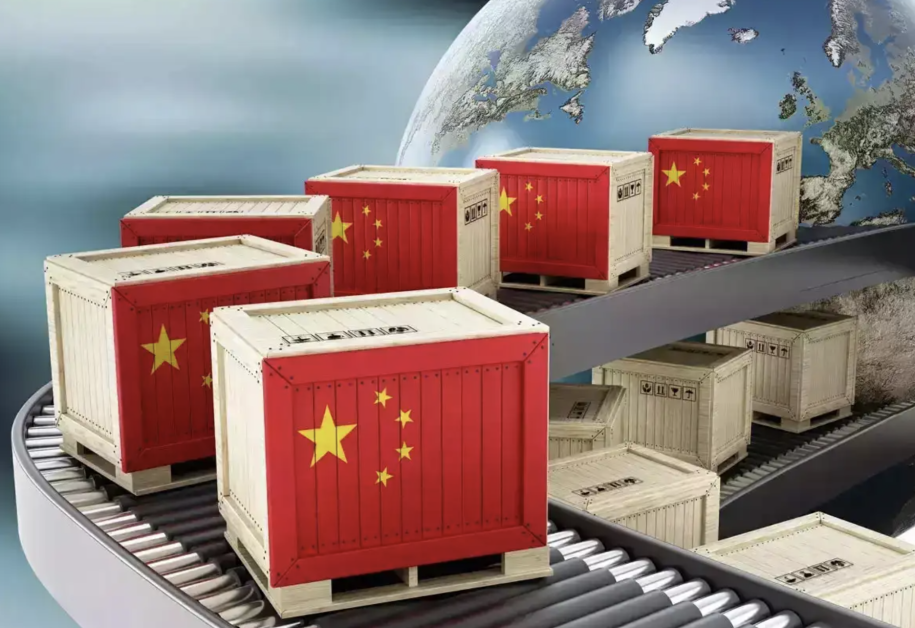
China’s $1 Trillion Trade Surplus: A Global Economic Shockwave No One Can Ignore
2026-08-19
China just crossed an economic threshold no country in modern history has ever reached—and it did so quietly. The world’s second-largest economy has now amassed an annual goods trade surplus exceeding $1 trillion, a figure so large it demands attention from every central bank, trade ministry and investment desk on the planet.
This isn’t just a blockbuster trade print. It’s a flashing red indicator of the global imbalances powering today’s economic cycle: a China exporting harder than ever, a world absorbing its industrial output at record scale, and trading partners bracing for the political and competitive fallout.
Behind the headline is a deeper story—one of surging exports, stagnant imports, a weaker renminbi, a sluggish Chinese consumer, and an industrial machine leaning on the rest of the world to offset domestic fragility. From EVs and solar panels to electronics and machinery, China is selling more abroad just as its own economy struggles to generate internal demand.

Image:Containers are loaded onto a China-Europe freight train in China's Jiangsu province on April 10. The country's exports in November recovered from a decline in the previous month on improved global economic sentiment. (China Daily via Reuters)
The result is a surplus so large it could reshape trade relations, currency markets, and industrial policy from Brussels to Washington—testing how much of China’s overcapacity the global economy can swallow before political patience runs thin.
What just happened — and why it matters
For the first time in history, People's Republic of China (China) has posted an annual goods trade surplus north of US $1 trillion.
The milestone comes after a robust rebound in exports in November — up 5.9% year-on-year — while imports crept up just 1.9%.
○ The reported surplus for the first 11 months of 2025 stood at roughly US$1.08–1.076 trillion.
○ In November alone, the monthly surplus was about US$112 billion, one of China’s largest on record.
This is not simply a “strong export quarter”—it is a structural signal of a remade global trade backdrop: one in which China’s export engine is roaring even as its domestic demand remains muted.
Underlying Dynamics: Exports up, domestic demand sluggish
Exports rebounding — even under tariff pressure
1. November’s 5.9% on-year export growth marks a sharp reversal from the previous month’s dip, and came in well above consensus forecasts.
2. Shipments to the United States — traditionally a major destination — remain deeply depressed; November exports to the US reportedly fell nearly 29% year-on-year.
3. However, China appears to be successfully rerouting exports to other markets — notably the European Union, Southeast Asia, Africa, and Latin America.
This “trade-diversion” or “rebalancing” — away from the US and toward other regions — has become more than a temporary patch: with the surplus now in trillion-dollar territory, it looks structural.

Credit Image: South China Morning Post
Imports lag — a sign of weak domestic demand
a.Imports grew only 1.9% in November — far behind export growth, and consistent with weak internal demand.
b.The meager import growth signals continued softness in Chinese consumption and investment, especially as the property sector remains under pressure and domestic demand stays fragile.
In effect, China is exporting its way out of internal economic sluggishness: a renewed “export-led growth model,” rather than one driven by domestic demand or consumption.
Broader Implications: Global imbalances, potential backlash, structural shift
A global-imbalance alarm bell
A trade surplus of this magnitude — over US$1 trillion — is unprecedented, and will almost certainly intensify scrutiny from global partners.
Expect growing pressure from advanced economies (EU, US) and regions facing competition from Chinese exports. Politicians and trade regulators may call for new tariffs, anti-dumping measures, or industrial-policy countermeasures. Indeed, European voices are already signaling potential pushback.
In short: what began as a trade story is fast morphing into a geopolitical and macroeconomic flashpoint.
China leaning harder on external demand — for now
With domestic consumption weak and investment muted, China appears to be doubling down on exporting to keep its factories humming. That shift may sustain growth in the short-to-medium term — but it deepens reliance on the global economy.
For trading partners — particularly those manufacturing similar goods or competing for export markets — the surge raises concerns about global overcapacity, price dumping, and margin pressure across sectors such as consumer electronics, solar, EVs, batteries, and other industrial goods.
FX, rates and competitiveness angle
A large surplus exerts upward pressure on China’s foreign-exchange reserves and on its currency flows. Coupled with a soft domestic pricing environment (owing to weak demand), this enhances China’s price competitiveness. Observers note this could further intensify export dominance just when many other major economies face disinflation and high real interest rates.
This dynamic complicates the global monetary and trade policy environment — especially for countries whose exporters may now face stiffer competition from cheaper Chinese goods.
What this means for investors & markets
From an investment lens:
1.Companies in emerging-markets (EM) Asia, Europe, Latin America, and Africa involved in exports — or competing with Chinese exports — may be among the most affected.
2.Industries like autos, solar, shipping, consumer electronics, and industrial manufacturing could see margin pressure or share shifts due to heightened competition.
3.At the same time, firms and sectors dependent on Chinese demand (trade-finance, commodities, shipping lanes, raw-material suppliers) could benefit.
4.Closely watch FX policy out of Beijing and any new trade-policy signals from Washington, Brussels or major trading hubs.
Fact-Check & What We Know versus What Remains Uncertain
What is settled (as of December 2025 data):
○ China’s reported annual goods trade surplus has crossed the US $1 trillion mark — roughly US$1.08 trillion for first 11 months.
○ November exports rose +5.9% y/y; imports rose +1.9%.
○ Exports to the US are sharply down, while shipments elsewhere — EU, ASEAN, Africa, Latin America — are up, indicating structural rerouting.
What remains to be seen / where caution is needed:
○ Whether this surplus is sustainable over the next few years — especially if global demand softens or if trading partners retaliate.
○ How deeply global allies (EU, US, others) will react: whether via tariffs, anti-dumping actions, or broader industrial-policy moves.
○ Whether China will successfully pivot toward rebalancing: boosting domestic demand, consumption, and investment — or continue lean export-first. Recent domestic weaknesses (property slump, soft consumption) raise doubts.
The long-term impact on global supply-chain structures, pricing, and industrial competition — especially in sectors where China enjoys scale advantages.
What to Watch Next — Key Risks and Drivers
Trade-policy backlash: Watch for announcements or proposals from the European Union, United States Department of Commerce / USTR, and other major traders for tariffs, anti-dumping, or trade-remedy investigations. Rising political pressure is almost inevitable given the size of the imbalance.
FX & currency moves: Any step by Beijing to revalue the renminbi, or moves by global central banks to respond to cross-border capital flows, could ripple through trade competitiveness, export margins and currency-sensitive sectors globally.
Domestic demand & structural reforms in China: Whether China attempts — and succeeds — in reviving domestic demand and rebalancing away from export dependence. Some signals point to possible stimulus in 2026.
Overcapacity & global price impact: Particularly in sectors where China has scale (EVs, solar panels, batteries, consumer electronics): risk of oversupply, price declines, margin compression for global competitors, and shifting trade flows.
Spillover to other emerging economies: As Chinese goods flood global markets, producers elsewhere (e.g. Asia, Africa, Latin America, Europe) will feel competitive pressure — potentially prompting those governments to respond with protective measures.
Conclusion: This Is Bigger Than Just a Trade Report
The crossing of US $1 trillion in annual trade surplus isn’t a mere headline — it's a macro-economic signal shift. It reflects a China that, in the face of domestic headwinds (soft consumption, property slump, weak investment), is doubling down on external demand to power its growth.
That shift reverberates far beyond Beijing. For global markets, it amplifies structural trade imbalances, fuels currency and capital-flow stress, and raises the specter of trade-policy retaliation. For emerging markets, it means stiffer competition and a tougher fight for export dollars. For industrial economies — especially in sectors from EVs to electronics — it heightens the urgency to re-evaluate supply chains, competitiveness, and strategy.
In short: this is not just a strong export bounce. It’s a signal that China’s growth model is tilting harder toward the world — and the world will have to decide how much of that it can absorb.

Stay updated with our latest news and articles. Join our newsletter!
Trending Now
No trending posts found.